
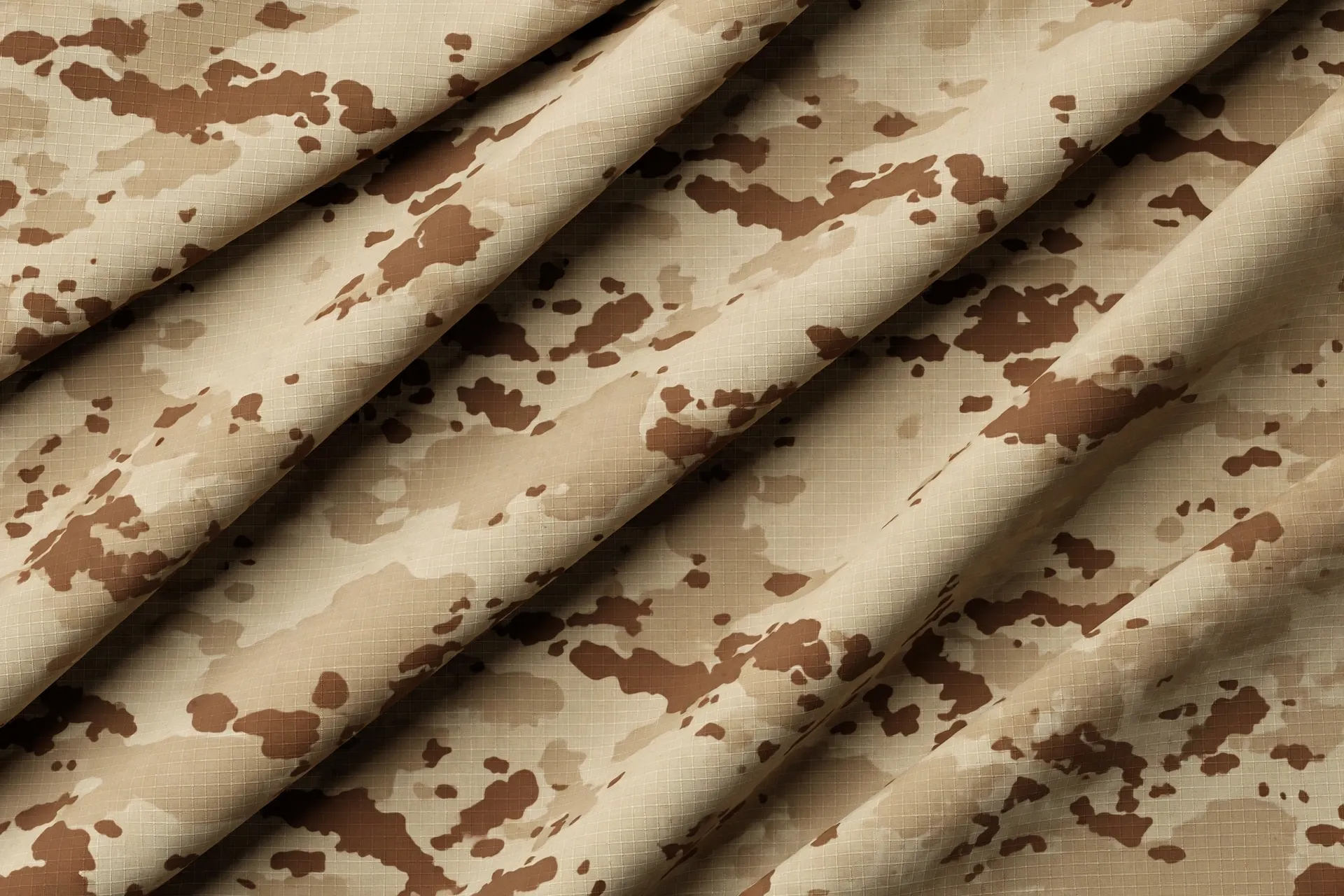
Desert Tan 3-Color Desert
Known as Chocolate Chip or Cookie Dough, the 3-Color Desert was the US standard desert camo from 1981 to 1992. Famous in Gulf War 1991, it used tan base with brown and small black-white rocks to mimic desert pebbles. Replaced by 3-color DCU.
History & Origin
Developed in 1962 by US Army Natick, tested in Yuma desert. Officially adopted 1981 as DBDU. First combat use Panama 1989, then Gulf War 1991. Retired 1992 because pattern was too dark for open desert.
Specifications
- Pattern: 3 colors - Light Tan base, Dark Brown blobs, Small Black & White pebbles
- Pantone: Tan 7502C, Brown 7526C, Black 7C + White
- Fabric: 50/50 NyCo Twill, 100% Cotton Twill, 100% Nylon
- NIR: Early NIR compliant, later versions non-compliant
- Repeat: 24x24 inch with scattered rock pattern
- Nickname: Chocolate Chip, Cookie Dough, Desert Storm camo
Color Analysis
- Base Tan 60% - matches sand
- Dark Brown 25% - shadows of rocks
- Black pebbles 10% + White 5% - scattered stones illusion
- Works best at 50-300m in rocky desert with pebbles
Uses
- Terrain: Rocky deserts, North Africa, Middle East, Gulf
- Branches: US Army, USMC, Coalition Forces 1991, Saudi, Egyptian Army used similar
- Gear: DBDU uniform, M65 field jacket, boonie, ALICE packs, helmet covers
Why It Failed & Replaced
Too dark for open sand deserts, high contrast made soldiers visible at long range. Rocks pattern worked only where pebbles exist. Replaced by lighter 3-color DCU without black rocks in 1992, then by Desert MARPAT and Multicam Arid.
How to Identify Original
- Original US has DSA/DLA contract number inside pocket
- Buttons brown, not black - sewn with 4 holes
- NIR tag inside collar, fabric feels stiff NyCo
- Reproduction often has brighter tan and missing white pebbles
Care
Wash cold, no bleach, air dry, NIR coating degrades with fabric softener, vintage pieces collectible - wash rarely to preserve print.